
FreeCell
How to Play Opus Solitaire
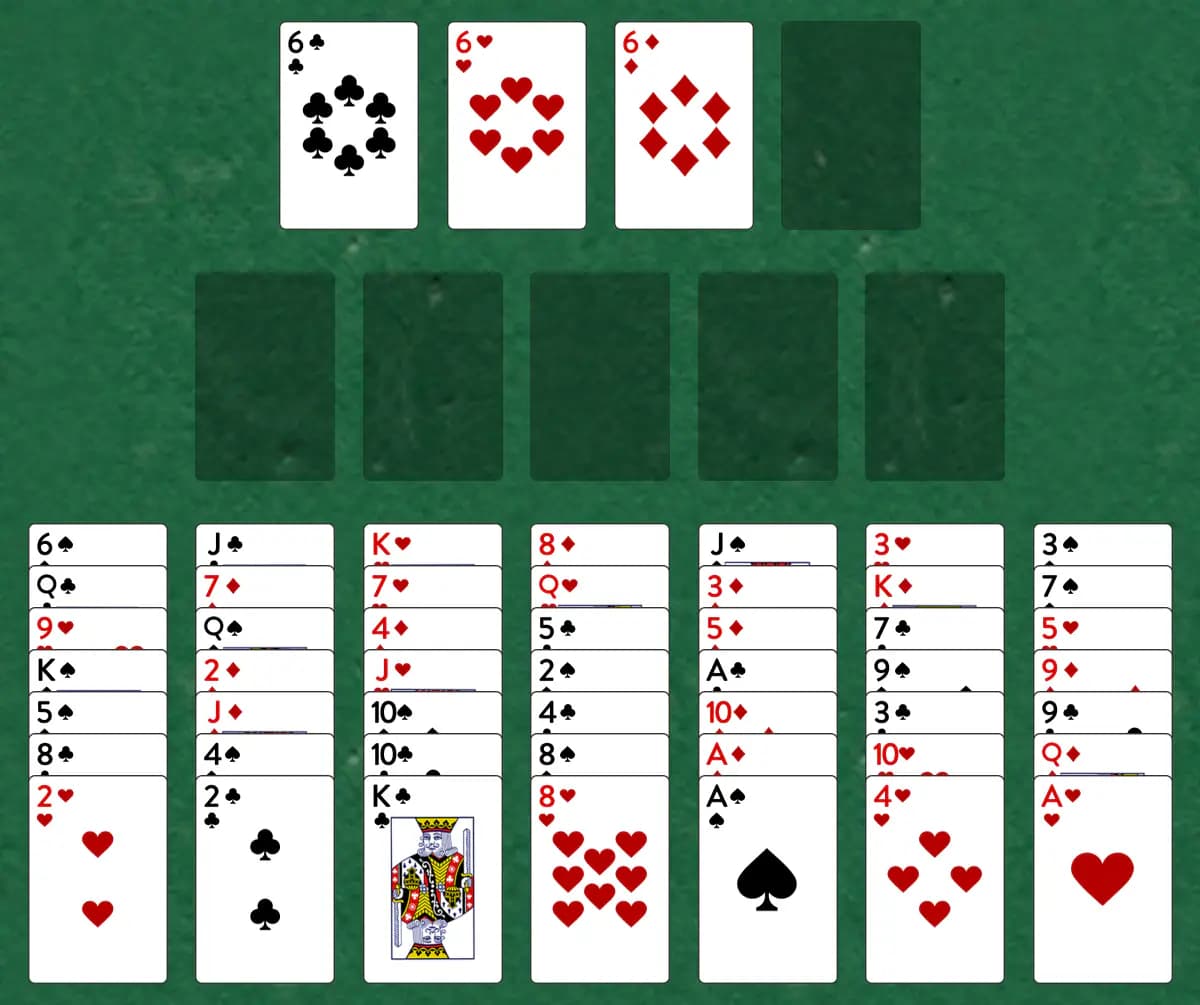
Opus is a harder variant of Penguin solitaire with a randomly chosen base rank each deal, five cells for temporary storage, and seven tableau piles where you build in the same suit one rank at a time. The goal: Move all 52 cards to four foundation piles, starting with a randomly chosen rank each deal and building one rank higher within each suit.
Setup
- A base rank is chosen at random for the deal. The first card dealt to a foundation pile reveals that rank, and two more cards of the same rank are dealt to two other foundation piles—one foundation starts empty, and you'll need to find and place its matching card yourself.
- Seven tableau piles are dealt: 7 cards to each pile, all face up. The first pile gets a card one rank below the base rank placed at the bottom.
- Five cells (temporary storage spaces) sit above the tableau. Each holds one card at a time.
How to play
- Build on tableau piles by placing cards one rank lower in the same suit (e.g., 7♠ on 8♠).
- Move entire sequences of same-suit cards together if each card is one rank lower than the card below it.
- Foundations build upward in the same suit and wrap from King back to Ace, so each pile eventually holds all 13 ranks no matter which rank it started on.
- Play cards from the tableau or cells directly to the foundations.
- Use cells to temporarily store cards you can't play immediately.
- Empty tableau piles can only be filled with a card one rank below the base rank (e.g., if the base is 8, empty piles accept 7s).
- Matching cards move to the foundations automatically once no other card could be built on them; you can adjust this behavior in Settings.
How to win
Objective: Move all 52 cards to four foundation piles, starting with a randomly chosen rank each deal and building one rank higher within each suit.
You win when all 52 cards are stacked on the four foundation piles in correct sequences. You're stuck when cards remain and no legal moves exist.
Tips
- With a random base rank, adjust your strategy each game. Note which rank starts and plan your tableau moves accordingly.
- Cells are limited to five—use them wisely for cards that block better plays.
- Same-suit building limits flexibility compared to alternating-color games, so plan moves carefully.
Play Opus free on Windows
CardTray is a free solitaire app for Windows that includes Opus alongside 300+ other games. It saves every move as you play, so you can close the window and pick the game up later, replay any deal, and take on a new Daily Challenge deal every day. Browse every game in the Game Gallery.
Related games
More games from the FreeCell family:
- Skippy — A modern game with a clever mechanic: each deal starts with a random base rank for the foundations, making every game feel fresh.
- Lasker — A Chessboard variant where the foundation base rank is randomly chosen each deal.
- Big FreeCell — Play FreeCell with two full decks spread across ten tableau piles and eight temporary cells, building foundations up by suit.
The tool for this — Game Gallery
Every game in one library: Klondike, Spider, FreeCell, Pyramid, Golf, Yukon and three hundred more. Each one shows a preview of its opening deal and how often you've played and won it. Learn more about the Game Gallery.
Windows 10/11 (x64) · Free · No account